Blogs

Resolving Boundary Disputes & Property Line Conflicts in WV
Navigate Property Line Conflicts
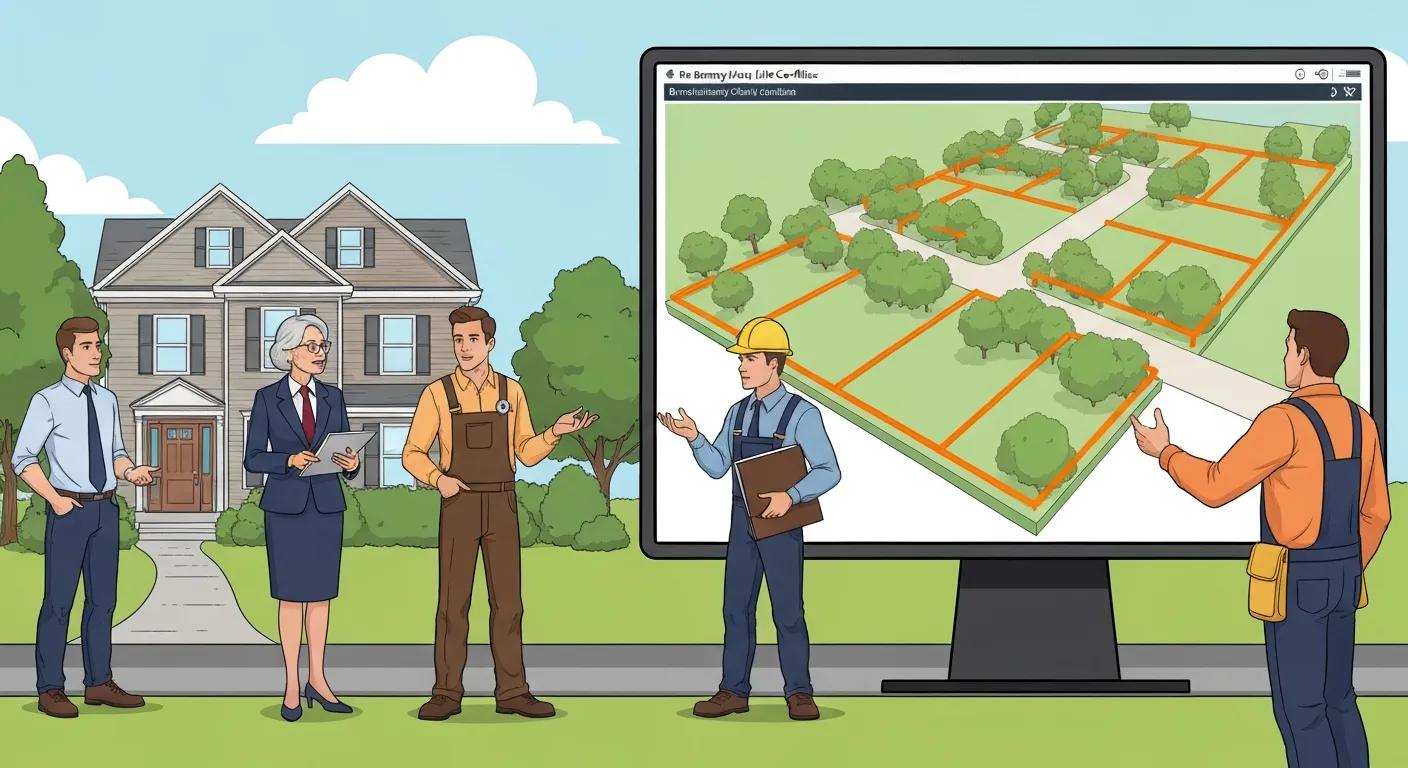
Boundary disputes — disagreements over property lines, encroachments, or easement rights — can escalate quickly when surveys, deeds, or site improvements don’t align. This guide lays out what typically causes property line conflicts in West Virginia, how state law (including adverse possession and quiet title remedies) treats those problems, and the practical steps owners and lawyers use to prevent and resolve disputes. You’ll learn how up-to-date surveys and careful title research clarify competing claims, when negotiation or mediation makes sense, and what to expect if a disagreement proceeds to court. The article outlines common causes, the relevant West Virginia statutes and doctrines, a stepwise strategy (negotiation → mediation → litigation), and tactical checklists for homeowners and land professionals. Throughout, we highlight concrete actions — commissioning accurate surveys, reviewing the chain of title, documenting possession, and pursuing remedies like quiet title — so property owners can act decisively to protect their rights under West Virginia law.
What Are Common Causes of Property Line Disputes in West Virginia?
Boundary disputes happen when physical markers, written legal descriptions, or on-the-ground improvements don’t match, creating competing claims and uncertainty. Differences between surveys, vague or outdated deed language, and missing monuments often produce overlaps or gaps that spark disagreements between neighbors or between owners and developers. Encroachments — fences, sheds, driveways — and misunderstandings about recorded or unrecorded easements also generate conflict when one party assumes rights not reflected in the record. Development, parcel changes, and long-standing use can surface problems during sales, refinancing, or construction.
Common causes include:
Conflicting surveys or unclear metes-and-bounds deed language that leave bearings or distances in doubt.
Encroachments and improvements placed without express permission or absent a recorded easement.
Misunderstood easements where rights-of-way, utility accesses, or shared paths are assumed but not documented.
These issues lead directly into the next topic: how conflicting surveys and aged deeds create the factual and legal confusion parties must untangle.
How Do Conflicting Surveys and Old Deeds Lead to Boundary Disputes?

Conflicting surveys and historic deed descriptions create disputes because they can show different coordinates, monuments, or metes-and-bounds for the same parcel. A modern boundary survey pins down measured corners and lines; older deeds that rely on imprecise natural landmarks or outdated bearings may produce results that don’t match current field evidence. Surveyor error, changed topography, and moved or lost monuments make reconciliation harder and can create gaps or overlaps between neighboring titles. Property owners typically respond by ordering a current boundary survey, comparing it with recorded plats and older deeds, and assembling chain-of-title documentation to explain the differences.
Resolving these contradictions often requires both title research and, when necessary, a survey reestablishment. Understanding how survey work and title records interact prepares owners to pursue a negotiated settlement or pursue court remedies if agreement can’t be reached.
What Role Do Encroachments and Easements Play in Property Conflicts?
Encroachments occur when a structure or improvement extends onto another’s land without permission, while easements grant a legal right to use another’s property for a particular purpose. Both can sour neighbor relations and trigger legal claims. An encroachment — a fence, porch, or driveway — may be removable, subject to compensation, or give rise to a prescriptive easement depending on how long and openly it has existed. Easements may be express (recorded), implied, or prescriptive, and they can limit an owner’s ability to remove structures or block access. Remedies range from negotiated relocation or compensation to quiet title actions or injunctive relief that confirm or limit use.
When an encroachment or easement dispute arises, clear documentation — surveys, recorded instruments, photographs, and witness statements — is essential to support settlement talks or court filings. That documentation leads naturally to an examination of how West Virginia law provides statutory and judicial routes for resolution.
How Can West Virginia Property Line Laws Help Resolve Boundary Disputes?
West Virginia law supplies doctrinal tools — statutory provisions and judicial remedies — that resolve competing claims by defining possession standards, title remedies, and procedural options. Statutes and controlling case law set out the elements of adverse possession, explain how recorded instruments operate, and authorize remedies like quiet title and declaratory relief to clarify ownership. These legal mechanisms translate factual disputes into legal determinations by applying statutory time periods, notice rules, and burdens of proof, enabling courts to remove clouds on title or enforce property rights. Knowing these frameworks helps owners and their advisors evaluate the strength of a claim and choose a strategy that balances cost, speed, and certainty.
Key statutory doctrines and remedies in West Virginia address possession, title certainty, and court-ordered declarations — the next sections summarize those rules and how they apply to boundary disputes.
What Are the Key Statutes Governing Property Boundaries in WV?
West Virginia’s statutes and case law govern adverse possession, the effect of recorded instruments, and actions to quiet title. One statute commonly cited in research is West Virginia Code §55-4-31A, which appears in compilations dealing with possession and title matters. Statutes establish possession periods, notice requirements, and how recorded deeds interact with subsequent claims. County recording records, plats, and index entries create constructive notice, while case law guides courts in interpreting ambiguous descriptions and competing evidence. Because statutory language and local recording practices affect how claims must be proved, consulting county records and experienced counsel is essential.
Understanding these statutory touchpoints helps owners decide whether negotiation, a quiet title action, or another remedy best fits their situation under West Virginia law.
How Does Adverse Possession Work Under West Virginia Law?
Adverse possession in West Virginia requires proof of continuous, exclusive, notorious, and adverse possession for the statutory period. Typical elements include open and notorious use that would put the true owner on notice, exclusivity that excludes others, and uninterrupted possession for the required time. Factors such as color of title or the possessor’s good faith may affect the analysis. Defenses include permissive use by the owner, lack of continuous possession, or timely interruption by the record owner. Property owners concerned about adverse possession should document their use, send written notices when appropriate, and consider boundary agreements to prevent hostile possession from maturing into title.
Because adverse possession can, over time, extinguish title rights, prompt action — surveying, sending encroachment notices, and seeking legal advice — protects ownership and reduces the risk of involuntary loss.
What Are the Effective Strategies to Resolve Boundary Disputes in West Virginia?
Effective resolution typically follows a tiered approach: start with cooperative negotiation, move to mediation or other ADR when helpful, and reserve litigation (quiet title, declaratory judgment, injunction) for disputes that cannot be settled. Negotiation centers on fact-gathering — surveys, title reports, and records of possession — so parties can propose boundary agreements or compensation. Mediation offers a structured, confidential forum that often reduces cost and preserves party control. Litigation yields binding judicial determinations but brings higher costs, expert testimony (surveyors), and longer timelines. Attorneys use surveys, negotiation, title research, and litigation tactically to guide clients toward the best available outcome.
Below is a concise comparison of common resolution methods to help property owners choose the right path.
ApproachCharacteristicTime/Cost/OutcomeNegotiationInformal, party-drivenLower cost; flexible agreements enforceable by contractMediationNeutral facilitator, confidentialModerate cost; often high settlement rate when parties cooperateLitigationCourt-ordered resolutionHighest cost/time; produces enforceable judicial decrees
This comparison clarifies trade-offs and helps owners pick negotiation, mediation, or litigation based on urgency, complexity, and willingness to compromise.
How Does Negotiation Help Settle Property Line Conflicts?
Negotiation aligns the facts and the parties’ interests to produce voluntarily accepted boundary agreements that are usually faster and less expensive than court proceedings. Preparation includes ordering an accurate boundary survey, compiling chain-of-title documents, and estimating compensation or relocation costs where appropriate. Attorneys negotiate terms, draft boundary line agreements, and arrange recording instruments that bind successors; such agreements can address monumentation, revised deed language, or easement grants. Successful negotiation preserves relationships and can be tailored — splitting land, modifying improvements, or formalizing access rights — to avoid prolonged conflict.
A well-managed negotiation often results in recorded instruments that prevent future disputes and reduce the need for enforcement actions.
When Is Mediation Appropriate for WV Boundary Disputes?
Mediation fits disputes where the parties want a faster, confidential, and mutually acceptable resolution without the cost and publicity of trial — especially when factual issues rest on survey interpretation or equitable accommodation. A mediator helps parties explore options like boundary adjustments, compensation, or shared-use agreements while keeping discussions off the court record. Mediation is especially useful when both sides face uncertainty about litigation costs or outcomes and when preserving the relationship matters. Timing is important: mediation often works best after surveys and title work clarify the issues but before entrenched litigation raises stakes and tensions.
Mediation’s confidentiality and flexibility make it an effective bridge between negotiation and litigation when the parties remain open to compromise.
What Should You Know About Litigation for Property Line Disputes in WV?
Litigation is necessary when negotiations fail and a court must resolve title or adverse possession claims, usually through quiet title actions, declaratory judgments, or injunctive relief to stop ongoing interference. Courts expect clear evidence — boundary surveys, chain-of-title documents, photographs, and expert surveyor testimony — to resolve factual and legal disputes. Timelines vary by county and complexity; parties should prepare for discovery, motions, trial testimony, and possible appeals. Litigation delivers a binding resolution but carries higher cost and the risk of an outcome that neither side prefers. Counsel’s role is to evaluate probabilities, marshal evidence, and seek the most favorable legal remedy for the client.
Knowing these litigation mechanics helps owners decide when settlement or formal adjudication best protects their interests.
Resolution MethodProcessTypical ResultNegotiationDirect talks, surveys exchangedRecorded boundary agreementsMediationNeutral facilitationSettlements with enforceable termsLitigationCourt filings, evidence, judgmentJudicial decree resolving title or rights
This table underscores how each method turns evidence into enforceable outcomes, helping owners choose the approach that matches their goals and risk tolerance.
Why Choose a Boundary Dispute Attorney or Real Estate Lawyer in West Virginia?
Working with counsel gives you legal analysis, procedural guidance, and local courtroom experience that materially affect strategy and outcomes. Attorneys interpret deed language, coordinate professional surveys, order title reports, negotiate on clients’ behalf, and, when needed, prosecute or defend quiet title and injunctive actions. Local knowledge of West Virginia statutes, county recording practices, and judicial tendencies helps counsel set realistic timelines and settlement targets. Experienced lawyers also anticipate evidentiary needs — such as expert survey testimony — and advise clients on risk mitigation, insurance questions, and corrective instruments to prevent future disputes.
Attorneys resolve boundary conflicts by integrating surveys, negotiation, title research, and litigation when appropriate to achieve practical, enforceable results.
What Qualities Should You Look for in a WV Property Line Attorney?
Choose a lawyer with solid real estate litigation experience, familiarity with boundary survey practice, proven negotiation skill, and courtroom experience in the relevant county. Relevant qualifications include a track record with quiet title matters, comfort coordinating surveyors, and clear communication about costs, timelines, and likely outcomes. Ask potential counsel about similar cases they’ve handled, what documents to bring to an initial meeting, and how they work with surveyors and title companies. Warning signs include vague timelines, reluctance to consult experts, or limited local procedural knowledge — factors that can increase expense and delay resolution.
Preparing a concise packet of deeds, surveys, photos, and a timeline of possession helps an attorney evaluate options and recommend a targeted strategy more quickly.
How Does RWK LAW Support Clients in Resolving Boundary Disputes?
provides in Charleston and the Kanawha Valley, handling title disputes, boundary disagreements, and related real property litigation. The firm offers hands-on support: coordinating professional surveys, conducting thorough title research, negotiating boundary line agreements, and pursuing litigation under West Virginia procedural rules when necessary. and allow clients to move from evidence-gathering to enforceable agreements or court resolution while ensuring filings and recorded documents meet county and state requirements.
These services guide property owners from initial fact-gathering to durable legal solutions in a structured, legally sound way.
Need Assistance with a Property Line Dispute?
Don't let boundary conflicts disrupt your peace of mind. Our experienced team is ready to provide the legal guidance you need.
How Do Property Surveys and Title Research Prevent and Clarify Boundary Conflicts?
Surveys and title research work together to define property rights: surveys locate physical monuments and lines, while title research traces legal ownership and recorded encumbrances that affect those lines. A boundary survey maps corners, monuments, and improvements; an ALTA/NSPS survey addresses detailed transaction and lender needs; plats and subdivision records show recorded lot lines and easements. Title searches reveal the chain of title, recorded deeds, covenants, easements, and other encumbrances explaining why a boundary appears as it does on paper. Using both tools reduces ambiguity, helps avoid disputes during transactions, and builds courtroom-ready evidence if disagreements arise.
Survey results and title reports form the evidentiary backbone for negotiation, mediation, or litigation and support precise, defensible remedies.
Different survey types and when to use them:
Survey TypeWhat It EstablishesWhen to UseBoundary SurveyEstablishes true line and monumentationUse when deed language is ambiguous or a dispute existsALTA/NSPS SurveyDetailed transaction survey for lendersUse in commercial closings or when mortgage requirements applySubdivision PlatShows recorded lot lines and easementsUse for new development or municipal compliance
Why Are Professional Boundary Surveys Essential in WV?
Professional boundary surveys create an authoritative, measured record of corner locations and lines that courts and neighboring owners can rely on when resolving conflicts. A licensed surveyor combines field measurement, monumentation, deed interpretation, and plat research to produce a report and map explaining the basis for the determined line. In litigation, surveyor reports serve as expert evidence and form the technical foundation for quiet title claims or boundary reestablishment petitions. Homeowners should commission updated surveys before major projects, sales, or when disputes arise so decisions rest on current, defensible measurements.
Because surveys translate ambiguous descriptions into physical coordinates, they are indispensable for both preventing disputes and resolving them formally.
How Does Title Research Help Establish Clear Property Ownership?
Title research traces the chain of title, exposes recorded encumbrances like easements or mortgages, and uncovers defects — gaps, undisclosed heirs, or forged instruments — that cloud ownership. A title report identifies recorded rights that may limit use or flag competing claims; title insurance can protect purchasers against certain historical defects. When defects appear, remedies include corrective deeds, reformation, or quiet title actions to remove clouds and confirm ownership. Attorneys use title work to shape litigation strategy, draft settlement language, and ensure recorded instruments accurately reflect negotiated boundary resolutions.
Combining title research with updated survey data produces a coherent evidentiary record that supports enforceable outcomes and reduces the risk of later challenges.
Frequently Asked Questions
What steps should I take if I suspect a boundary dispute?
If you suspect a boundary dispute, begin by documenting the situation: take dated photos, gather any relevant deeds, and note when you first occupied or made improvements. Order a professional boundary survey to establish the true lines and obtain a title report to reveal recorded interests. With that evidence in hand, try to resolve the matter directly with your neighbor. If talks stall, consider mediation or consult an attorney about formal remedies.
How can I prevent future boundary disputes with my neighbor?
To reduce the risk of future disputes, get a professional boundary survey and keep clear, recorded agreements about property lines and improvements. Before installing fences or major landscaping, confirm lines with a surveyor and, if appropriate, record a boundary line agreement with your neighbor. Open communication about planned changes also helps prevent misunderstandings.
What is the role of a surveyor in resolving boundary disputes?
A surveyor provides the technical evidence needed to resolve boundary issues: accurate measurements, monument location, and a documented survey report. Surveyors review historical deeds, plats, and physical evidence to establish the most supportable boundary. Their reports and maps are critical in negotiations and often serve as expert evidence in court.
What should I do if my neighbor encroaches on my property?
If your neighbor encroaches on your land, document the encroachment with photos and notes, review your survey and title documents, and raise the issue with the neighbor informally at first. If you cannot reach an agreement, consider mediation or consult an attorney about injunctions or a quiet title action. Timely documentation and legal advice protect your options.
How does mediation differ from litigation in boundary disputes?
Mediation is a voluntary, confidential process where a neutral facilitator helps parties reach a mutually acceptable solution. It’s usually faster and less costly than litigation and preserves more control for the parties. Litigation is a formal court process that results in a binding judicial decision based on evidence; it can be lengthy, expensive, and adversarial. Mediation is often a good step before resorting to litigation.
What are the potential outcomes of a quiet title action?
A quiet title action asks the court to declare clear ownership and remove competing claims or clouds on title. Successful quiet title suits produce a judicial order confirming ownership and permitting corrected or clarified recordings. That ruling can restore marketability and make it easier to sell or refinance the property.
When should I consider hiring a property line attorney?
Hire a property line attorney when the dispute is complex, negotiations fail, or you face potential adverse possession claims. An attorney can interpret law, coordinate necessary surveys and title work, represent you in mediation, and, if needed, litigate to protect your rights. Local legal expertise is especially valuable for navigating county procedures and realistic case timelines.
How Do You Settle a Property Line Dispute in WV?
To settle a dispute, start by documenting the issue — dated photos, copies of deeds, and a timeline of occupation — then commission a boundary survey and obtain a title report to identify recorded interests. Present the facts to the neighbor and try to negotiate a boundary line agreement, relocation, or compensation if appropriate; if direct talks don’t succeed, consider mediation as a cost-effective next step. If settlement remains out of reach, a quiet title action or declaratory judgment can provide an enforceable court determination. Throughout the process, consult counsel to ensure documents are recorded correctly and statutory deadlines are preserved.
Those steps move parties from informal attempts at resolution toward enforceable outcomes while protecting legal options and evidentiary integrity.
Can a Neighbor Claim Your Land Through Adverse Possession in WV?
Yes. A neighbor can potentially acquire land by adverse possession if they meet the statutory elements — continuous, exclusive, open, and notorious possession for the required period under West Virginia law. Typical elements include visible use that would put the record owner on notice, exclusive control, and uninterrupted possession for the statutory timeframe; defenses include permissive use, interruptions by the owner, or insufficient notice. To guard against adverse possession, document your use, send written notices when appropriate, record boundary agreements, and promptly address encroachments through legal notices or litigation if necessary.
The history of land title issues in West Virginia highlights why clear legal processes matter for resolving ownership disputes.
Quieting Land Titles in West Virginia: Resolving Ownership Disputes for Marketable Title
Quieting land titles is the legal process that clears competing claims so a property has a marketable title. Difficulties with clear title in western Virginia date back to eighteenth‑century land grants made to large land companies, including the Ohio Company, the Greenbrier Company, and the Loyal Company; those early complexities help explain why quiet title procedures remain important today.
Benjamin Harrison Smith, Land Titles, and the West Virginia Constitution, 2012
This closing point reiterates the practical role counsel play in coordinating technical and legal remedies to preserve property rights and resolve contested claims.
The complexities of establishing clear title in West Virginia have deep roots, tracing back to early land grants and the state’s formative land-transfer history.
West Virginia Land Titles: Benjamin Harrison Smith and the Resolution of Ownership Disputes
Benjamin Harrison Smith, Land Titles, and the West Virginia Constitution. This historical account highlights Smith's contributions to the legal framework for clear land transfer in West Virginia and explores how the Constitutional Conventions of the nineteenth century shaped approaches to unappropriated, delinquent, and forfeited land. The quieting of land titles — resolving ownership disputes to produce marketable title — has been a longstanding challenge in the region going back to eighteenth‑century grants and extensive land companies.
Benjamin Harrison Smith, Land Titles, and the West Virginia Constitution, 2012

If you're in need of legal help, let's talk.
Our lawyers have many years of experience, and are excited to help you with your case. Whatever your legal needs may be, we can provide the experienced legal representation you require. Let's talk about your case and see how we can help you achieve the best possible outcome. Even in circumstances in which we are unable to represent a person, we can often help find another attorney that can. So make us your first contact.
Serving Charleston and the Kanawha Valley for 125 years.






Get In Touch
Phone Number:
Address
109 Capitol Street Suite 700
Charleston, WV 25301
Assistance Hours
Mon – Fri 9:00am – 5:00pm
Saturday – Sunday CLOSED