Blogs
West Virginia Family Law: What Issues Can Family Court Handle?
West Virginia Family Law: What Issues Can Family Court Handle?
Family law covers far more than divorce. West Virginia family courts handle many of the legal issues that arise when marriages end, parents disagree about children, financial support must be established, or an existing court order needs to be enforced or changed.
Understanding what family court can and cannot address can help you determine where a legal issue belongs and what type of proceeding may be necessary.
West Virginia family courts have jurisdiction over matters including divorce, annulment, separate maintenance, child support, paternity, parenting plans, grandparent visitation, property distribution, spousal support, enforcement proceedings, and final hearings involving domestic violence protective orders. Family courts also have jurisdiction over certain name-change and minor-guardianship proceedings.
For help with divorce, parenting plans, child support, spousal support, protective orders, and other domestic-relations matters, learn more about Ray, Winton & Kelley’s Family Law, Divorce & Domestic Relations services.
What Does Family Court Handle in West Virginia?
West Virginia family courts are courts of limited jurisdiction. That means they handle the family and domestic-relations matters specifically assigned to them by state law rather than every type of civil dispute involving family members.
Some of the most common matters handled in family court include:
Divorce and annulment
Separate maintenance
Child custody and parenting plans
Child support
Paternity
Spousal support
Division of marital property
Grandparent visitation
Enforcement of parenting and support orders
Modification of certain existing family-court orders
Final domestic violence protective-order hearings
Certain minor guardianship and name-change proceedings
Each type of case has its own requirements, procedures, and legal standards.
Does West Virginia Family Court Handle Divorce?
Yes. Divorce is one of the primary matters handled by West Virginia family courts.
During a divorce, the court may need to resolve several separate issues, including:
Whether grounds for divorce have been established
Division of marital property and debts
Parenting arrangements
Child support
Spousal support
Enforcement of agreements or temporary orders
West Virginia law gives family courts authority to decide divorce cases and the related issues that fall within their jurisdiction. In limited circumstances, circuit courts may also have jurisdiction over a divorce, such as certain cases in which the parties have already executed a property settlement agreement and there are no child-support or parenting-plan issues to resolve.
For a broader explanation of the process, see Divorce in West Virginia: What to Expect From Start to Finish.
Does Family Court Decide Child Custody in West Virginia?
Yes, although West Virginia law generally uses the terms custodial responsibility and decision-making responsibility rather than relying only on the traditional word “custody.”
A parenting plan may address issues such as:
Where a child spends time
Each parent's caretaking responsibilities
Decision-making authority
Transportation and exchanges
Holiday and vacation schedules
Communication between parents
Other arrangements affecting the child's daily life
Family courts have jurisdiction over the allocation of parental responsibility and related parenting-plan matters.
Parents dealing with these issues may also benefit from reading Child Custody Basics in WV: Your Guide to Parenting Plans.
Can a Parenting Plan Be Changed Later?

A parenting plan is not necessarily permanent.
West Virginia law permits modification under certain circumstances. For example, a significant change may be appropriate when facts that were unknown or arose after the original order amount to a substantial change in circumstances and modification is necessary to serve the child's best interests.
The law also allows some modifications in other specified circumstances, including certain minor changes or situations involving arrangements that have already substantially differed from the existing plan.
This is different from simply ignoring an existing parenting plan. Until an order is modified, the existing court order generally remains the governing arrangement.
Does Family Court Handle Child Support?
Yes.West Virginia family courts can establish child-support obligations and hear proceedings involving enforcement or modification of existing support orders.
Child-support cases may involve questions about:
Each parent's income
The amount of support required
Health-care expenses
Changes in employment or income
Enforcement of unpaid support
Whether an existing support order should be modified
West Virginia law allows a court to revise a support order when changed circumstances or the needs of the child or parties justify modification under the applicable legal requirements.
For more information, see Child Support in West Virginia: How It's Calculated and When It Changes.
Does Family Court Determine Spousal Support?
Family court can also decide whether spousal support is appropriate in cases that fall within its jurisdiction.
Spousal support is separate from child support. It involves financial support paid by one spouse to the other and may become an issue during or after a divorce or separate-maintenance proceeding.
Whether support is awarded depends on the circumstances of the case and the factors established by West Virginia law.
RWK's related guide, Spousal Support in WV: When Alimony Is Awarded and How It's Determined, provides a more detailed look at this issue.
Does Family Court Divide Property During a Divorce?
Yes.
West Virginia family courts have jurisdiction over property-distribution proceedings arising from domestic-relations cases.
Property issues may include:
The family home
Bank and investment accounts
Retirement assets
Vehicles
Business interests
Personal property
Debts accumulated during the marriage
A key question is often whether an asset or debt is considered marital or separate property.
For a closer look at this issue, see How Property Is Divided During a Divorce in West Virginia.
Does Family Court Handle Paternity Cases?
Yes.
Family courts have jurisdiction over proceedings to establish paternity. A paternity case may also involve related issues such as child support, parenting plans, custodial responsibility, and decision-making responsibility.
Establishing legal parentage can therefore affect both financial obligations and parental rights.
What About Grandparent Visitation?

West Virginia family courts can hear petitions involving grandparent visitation when the statutory requirements are met.
These cases are separate from ordinary disputes between parents and grandparents. A court must apply West Virginia's specific rules governing when grandparent visitation may be ordered.
RWK also has a dedicated guide: Can Grandparents Seek Visitation Rights in Charleston, WV?
Does Family Court Handle Protective Orders?
Family courts play an important role in West Virginia domestic-violence protective-order proceedings.
An emergency protective-order proceeding may begin in magistrate court. Family court then conducts the final domestic-violence protective-order hearing.
A final protective order may address matters such as contact between the parties, use of a shared residence, temporary arrangements involving children, and other protections permitted by law.
For a detailed explanation, see West Virginia Protective Orders: Filing, Hearings, and Legal Protections.
Can Family Court Enforce an Existing Order?
Yes.
Family courts can hear proceedings to enforce orders involving:
Child support
Spousal support
Parenting plans
Custodial responsibility
Decision-making responsibility
West Virginia law specifically gives family courts authority over civil contempt and other proceedings used to enforce these types of orders.
For example, if a parent repeatedly refuses to follow an established parenting plan, the other parent may have options for seeking enforcement rather than simply responding by violating the order themselves.
Can Family Court Modify Existing Orders?
In many situations, yes.
Family courts may hear requests involving modifications of parenting plans or support obligations when the applicable statutory requirements are satisfied.
However, the standard for modification depends on what type of order is being changed. A parent asking to alter a parenting plan, for example, may face different requirements from someone requesting a modification of child support.
A change in circumstances does not automatically change the existing order. A formal modification may be necessary.
What Does West Virginia Family Court Not Handle?
Not every dispute involving spouses, parents, or children stays in family court.
One important exception involves child abuse and neglect proceedings.
When an abuse or neglect case involving a child is filed in circuit court, the circuit court's orders concerning custodial and decision-making responsibility take precedence over conflicting family-court orders. In certain situations, the family court must pause related custody proceedings and defer to the circuit court handling the abuse or neglect case.
This distinction matters because a family disagreement involving parenting is not necessarily the same proceeding as a formal child abuse or neglect case.
Do All Family Law Disputes Have to Go to Trial?
No.
Some family-law disputes can be resolved through agreements between the parties.
West Virginia family court judges may also refer parents to mediation and parent education in appropriate cases.
Depending on the dispute, resolution may involve:
Negotiation between the parties
Attorney-assisted settlement discussions
Mediation
Agreed parenting plans
Property settlement agreements
A contested family-court hearing
The appropriate approach depends on the issues involved and whether the parties can reach an agreement that complies with West Virginia law.
When Should You Talk With a West Virginia Family Law Attorney?
Family-law issues frequently overlap.
A divorce may involve property division, child support, parenting arrangements, and spousal support at the same time. A parenting dispute may later lead to a request for modification or enforcement. A protective-order proceeding may also affect issues involving children or the family home.
Legal counsel can help identify which issues family court can address, what filings may be required, and how one proceeding could affect another.
For assistance with divorce, parenting plans, support, protective orders, and other domestic-relations matters, learn more about Ray, Winton & Kelley's Family Law, Divorce & Domestic Relations services.
Frequently Asked Questions About West Virginia Family Court
What cases does family court handle in West Virginia?
West Virginia family courts handle matters including divorce, annulment, separate maintenance, child custody and parenting plans, child support, paternity, spousal support, property distribution, grandparent visitation, enforcement proceedings, and final domestic violence protective-order hearings.
Does family court handle child custody?
Yes. Family court handles parenting plans and the allocation of custodial and decision-making responsibility unless another court has jurisdiction under circumstances such as a pending child abuse or neglect proceeding.
Can family court change a custody or parenting order?
Yes, when the requirements for modification under West Virginia law are satisfied. Depending on the circumstances, modification may require a substantial change in circumstances or another statutory basis for changing the existing parenting plan.
Can family court change child support?
Yes. A support order may be modified when the statutory requirements are met, including qualifying changes affecting income, circumstances, or the needs of the child or parties.
Does family court handle domestic violence protective orders?
Family court conducts final hearings in West Virginia civil domestic-violence protective-order proceedings. Emergency protective-order proceedings may initially occur in magistrate court.
Is family court the same as circuit court?
No. West Virginia family courts have limited jurisdiction over specified family and domestic-relations matters. Circuit courts are West Virginia's general-jurisdiction trial courts and handle other types of civil and criminal cases, including child abuse and neglect proceedings.

If you're in need of legal help, let's talk.
Our lawyers have many years of experience, and are excited to help you with your case. Whatever your legal needs may be, we can provide the experienced legal representation you require. Let's talk about your case and see how we can help you achieve the best possible outcome. Even in circumstances in which we are unable to represent a person, we can often help find another attorney that can. So make us your first contact.
Serving Charleston and the Kanawha Valley for 125 years.





Get In Touch
Phone Number:
Address
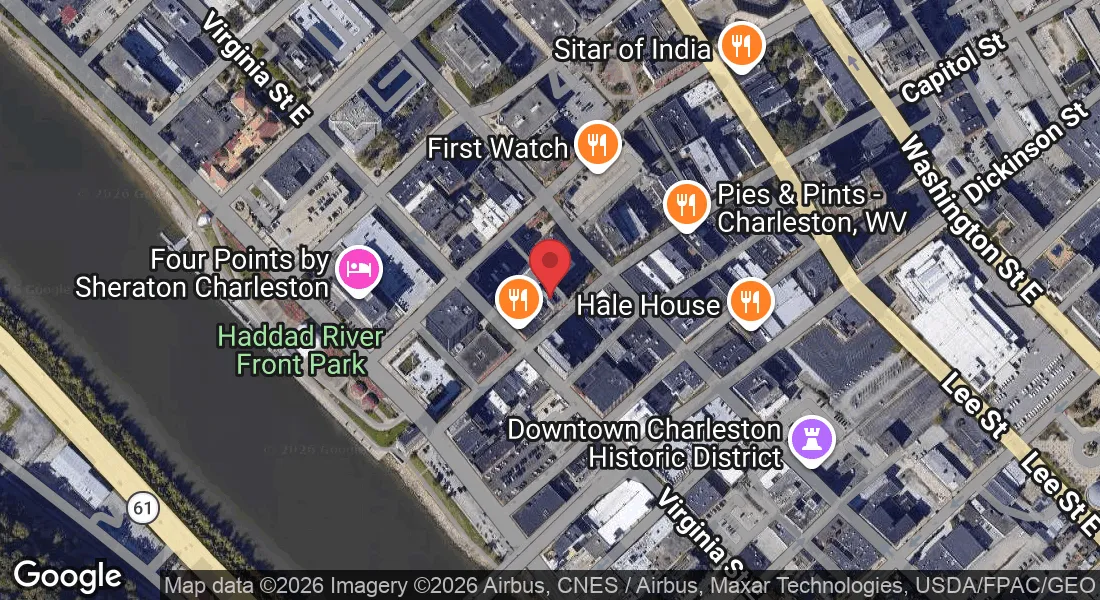
109 Capitol Street Suite 700
Charleston, WV 25301
Assistance Hours
Mon – Fri 9:00am – 5:00pm
Saturday – Sunday CLOSED