
Choosing the Best Divorce Lawyer in Charleston WV: A Guide
How to Choose the Right Divorce Lawyer in Charleston, WV
Choosing the right divorce lawyer in Charleston, WV is one of the most important decisions you’ll make for your finances, parenting plan, and long-term stability. This guide walks you through how to evaluate attorneys, the parts of West Virginia family law that matter most, and how to prepare so you get the most from your consultation. Divorce mixes emotion with complex legal steps—from filing paperwork to negotiating equitable distribution and parenting arrangements—so knowing which attorney qualities truly matter reduces surprises and improves results. Below you’ll find a clear framework: why local experience matters, a hiring checklist, the key questions to ask, a West Virginia step-by-step timeline, and practical next steps to schedule a confidential consultation. The guidance is tailored to Charleston and Kanawha County practice, explains common fee structures and dispute-resolution options, and shows how institutional experience supports effective representation.
Why Is Experience Crucial When Choosing a Divorce Lawyer in Charleston WV?
Experience pairs legal knowledge with the courtroom and negotiation instincts that only come from handling family law matters in West Virginia. An experienced family-law attorney knows the state’s rules on equitable distribution, spousal support, and child custody and applies them in ways that produce practical results. That local know-how reduces procedural surprises in Kanawha County, speeds routine filings, and strengthens negotiating position in mediation or settlement. Understanding a judge’s tendencies or the clerk’s scheduling practices can shorten timelines and protect your interim financial and custodial interests.
How Does Local Charleston WV Court Knowledge Benefit Your Divorce Case?

Local court knowledge means strategy aligns with Kanawha County practices: filing formats, expected deadlines, and how judges tend to rule on temporary matters. Attorneys familiar with local judges and courthouse procedures file motions that get timely attention, anticipate deadlines, and present arguments in the form judges prefer. That practical awareness helps you decide whether to seek emergency relief, push for early mediation, or prepare for trial—and it helps preserve parental time and financial positions while minimizing cost and stress.
What Does Over 125 Years of Family Law Practice Mean for Your Case?
A firm with a long institutional history brings refined systems, shared knowledge, and local relationships that benefit individual clients. Founded in 1897, a long-established firm shows intake, document preparation, and negotiation workflows that have been tested and improved over generations. Institutional memory speeds access to local experts—custody evaluators, forensic accountants—and supports consistent client service that limits avoidable delays. Longevity also signals credibility when coordinating with other professionals on complex matters like high-asset division or contested custody.
What Key Factors Should You Consider When Hiring a Divorce Attorney in Charleston WV?
Use a hiring checklist that balances legal skill, communication, fee transparency, and the attorney’s preferred dispute-resolution approach. Family-law specialization keeps an attorney current on West Virginia case law and custody evaluation practice; clear communication reduces anxiety and prevents mistakes; transparent fees avoid billing surprises; and the lawyer’s conflict-resolution style determines whether your case will be guided toward mediation, collaborative practice, or litigation. Compare each factor to your priorities—cost control, speed, privacy, or courtroom advocacy—to pick counsel who matches your goals and the likely path of your case.
Why Is Specialization in Family and Divorce Law Important?
Family law is full of technical issues—equitable distribution, custody factors, and spousal support calculations—that evolve through statute and case law. A specialist recognizes when to bring in valuation experts or custody evaluators and can translate legal theory into practical asset splits and parenting plans. For complex holdings, retirement accounts, or business interests, a routine family-law practice means the lawyer knows which discovery tools and experts produce reliable valuations. Choosing a specialist shortens research time and positions you for faster, better-informed negotiations or courtroom advocacy.
How Do Communication Style and Accessibility Affect Your Divorce Experience?
Communication affects confidence and case momentum. Responsive attorneys keep you informed and prevent costly misunderstandings. Expect clear guidance on typical response times, preferred channels (phone, secure portal, or email), and who on the team handles different tasks. Best practices include regular status updates, plain-language explanations of options, and proactive scheduling of milestones. When your lawyer communicates well, you can make timely decisions that often shorten discovery and settlement phases.
What Are Common Divorce Lawyer Fee Structures in Charleston WV?
Knowing fee structures helps you budget and choose the model that fits your case complexity and risk tolerance. Common arrangements include hourly billing for contested matters, flat fees for routine or uncontested work, and retainers that fund initial work and are drawn against as services are provided. Ask for realistic cost estimates and an explanation of likely additional expenses—expert fees, process servers, or filing costs—so there are no surprises.
Below is a comparison of common fee models, when they’re typically used, and what to expect so you can ask informed cost questions during consultations.
Fee ModelTypical UseWhen AppropriateHourly BillingAttorney bills for time spent on your matterBest for contested cases with complex discovery or uncertain scopeFlat FeeOne set price for defined services (for example, an uncontested divorce)Works well for straightforward matters with predictable tasksRetainer + DrawdownInitial retainer paid; fees and costs deducted as work progressesCommon for ongoing representation to secure availability and cover early costs
After reviewing fee options, insist on a written fee agreement, routine billing updates, and clear rules for hiring experts. Ask how lawyers estimate total costs, how often they issue invoices, and whether phased engagement is available to keep expenses manageable. Clear billing practices preserve trust and help you plan financially through the divorce process.
How Do Different Approaches to Conflict Resolution Impact Your Divorce?
Your chosen conflict-resolution method shapes timeline, cost, and control over outcomes. Mediation, collaborative law, and litigation each have trade-offs: mediation emphasizes negotiated agreement and is usually faster and less expensive; collaborative law uses a structured team approach to reach resolution without court; litigation asks the court to decide and often requires more time and expense. The right path depends on cooperation between parties, issue complexity, and whether urgent interim orders are necessary.
The table below summarizes practical pros and cons so you can match an approach to priorities like speed, privacy, and outcome control.
ApproachCharacteristicPros / ConsMediationNeutral facilitator helps both sides negotiatePros: lower cost, quicker, private. Cons: needs cooperation; result depends on negotiation strengthCollaborative LawStructured, cooperative negotiation with a commitment to avoid courtPros: respectful, problem-solving focus. Cons: may require new counsel if the process breaks downLitigationFormal court process resolving contested issuesPros: enforceable rulings and full discovery tools. Cons: higher cost, longer timeline, public record
Choose mediation or collaborative law when parties can negotiate realistically and want privacy; reserve litigation for cases requiring court intervention for safety, enforcement, or unresolved critical disputes. Ask prospective attorneys which methods they practice and where they have demonstrable results.
What Essential Questions Should You Ask a Prospective Divorce Lawyer in Charleston WV?
Bring focused questions designed to reveal competence in custody, alimony, property division, and client service. Ask about similar cases they’ve handled, expected timelines, likely costs, and how they would protect temporary financial or custody positions. Listen for specific examples, clear timelines, and a practical plan that matches your priorities.
Which Questions Reveal a Lawyer’s Experience with Child Custody and Alimony?
Ask how the attorney handles custody evaluations, which factors West Virginia courts weigh, and how spousal support is typically calculated. Good answers mention practical steps—when to seek temporary custody orders, when to involve parenting coordinators—and explain how income and length of marriage influence support. A lawyer experienced in custody disputes will describe work with evaluators and the evidence courts find persuasive.
How Can You Assess a Lawyer’s Responsiveness and Client Support?
Evaluate responsiveness by asking expected response times, who manages client communications, and whether a client portal is used for documents. Request references or look to public reviews to confirm service claims, and ask who will be your primary point of contact. Strong answers include concrete time commitments and a clear team structure that ensures consistent updates.
What Should You Know About the Lawyer’s Approach to Property Division?
Ask how the attorney values complex assets, detects hidden income, and separates marital debt from separate property. Find out whether they regularly use forensic accountants or valuation experts and how they secure temporary financial relief when needed. Practical responses explain when an expert is cost-effective, how retirement accounts are divided in West Virginia, and which negotiation tactics protect overall net worth.
How Does the Divorce Process Work in West Virginia and Charleston WV?
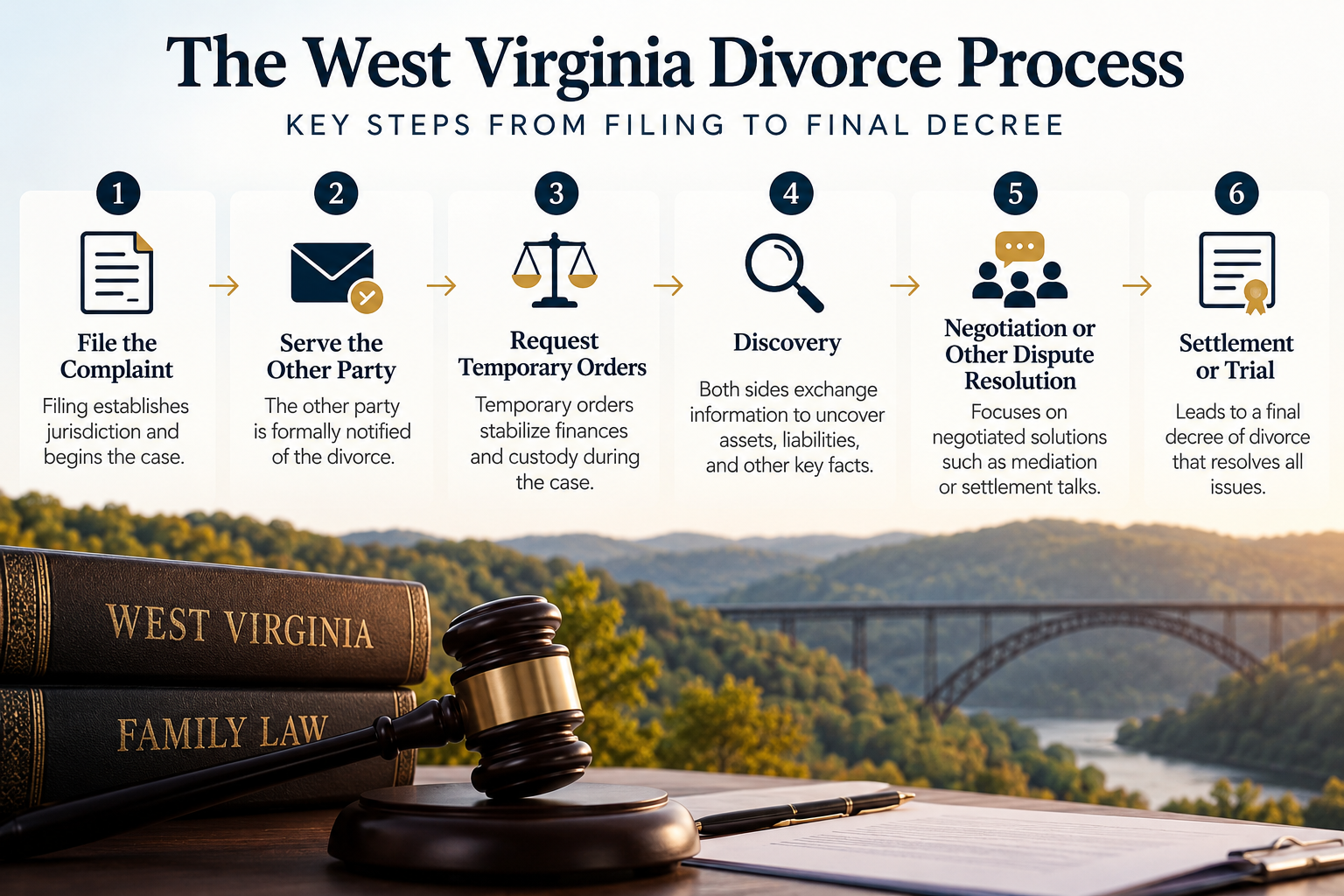
A West Virginia divorce typically follows these steps: filing the complaint, serving the other party, asking for temporary orders, discovery, negotiation or other dispute resolution, and either settlement or trial that leads to a final decree. Each stage serves a legal and tactical purpose—filing establishes jurisdiction, temporary orders stabilize finances and custody, discovery uncovers assets and liabilities, and ADR focuses on negotiated resolutions. Knowing these stages helps you choose counsel whose process fits your case.
What Are the Typical Steps and Timeline for Divorce in Charleston WV?
The table below outlines common procedural steps in a West Virginia divorce and typical Kanawha County timeframes; complexity, contested issues, and court backlog can change these estimates.
StepWhat Is Filed / DoneTypical TimeframeFilingComplaint or petition that begins the divorce1–2 weeks to file; service adds timeTemporary OrdersMotions for custody, support, or exclusive use of property2–8 weeks for hearings, depending on urgencyDiscoveryInterrogatories, document requests, depositions, valuations1–6 months depending on complexityResolution / TrialMediation, settlement negotiations, or trial and final decree1–12+ months; contested trials extend the timeline
Uncontested matters can resolve in a few months, while contested cases often take longer—especially when valuation experts or custody evaluations are needed. Early planning with your attorney and targeted discovery can shorten the schedule; realistic expectations prevent surprises.
How Can Understanding the Divorce Process Help You Choose the Right Lawyer?
Knowing the process lets you match an attorney’s strengths to your case phase—select negotiation-focused counsel for amicable splits or skilled litigators when trial is likely. In consultation, expect the lawyer to outline steps, propose a timeline, and identify main cost drivers. A lawyer who educates you about the process demonstrates strategic planning and effective client guidance.
What Makes RWK LAW the Trusted Choice for Divorce and Family Law in Charleston WV?
RWK LAW (Ray, Winton & Kelley PLLC) offers family-law services built on long-standing local practice and experience in family, estate, and business matters across West Virginia. The firm’s institutional history—founded in 1897—supports tested procedures for intake, document management, and local court navigation. Attorneys with a deep family-law focus coordinate expert retention efficiently and prioritize client communication to reduce delays. RWK LAW’s Charleston presence and family-law emphasis reflect the qualities clients should seek: local court knowledge, specialized practice, and a client-centered approach to resolving disputes.
Which Attorneys Specialize in Divorce and Child Custody Cases?
Attorneys associated with the firm include Christopher J. Winton, David S. Hughart, Mark W. Kelley, Franki L. Parsons, Scott H. Kaminski, and John J. Brewster—each brings strengths relevant to family-law matters. When choosing counsel, match an attorney’s specialty—custody, alimony, or property division—to your case needs. Ask any prospective RWK LAW attorney about similar matters they’ve handled and how their experience would shape discovery, expert selection, and courtroom advocacy.
How Do Client Testimonials Reflect RWK LAW’s Compassionate and Strong Representation?
Public client feedback for established local firms often highlights responsiveness, clear guidance, and effective advocacy, especially in sensitive custody or financial disputes. These themes point to consistent client service and outcome-focused representation that balances compassion with legal rigor. Review public platforms for client impressions and request references during a consultation to confirm fit and service level.
What Are the Next Steps to Schedule a Confidential Consultation with a Divorce Lawyer in Charleston WV?
Begin by gathering core documents and clarifying your priorities—custody goals, financial protections, and desired timeline—so your initial consultation is productive. Prepare a concise case summary, a list of major assets and debts, income documentation, and any existing court or protective orders. Prioritize questions about fees, experience with similar cases, and the attorney’s dispute-resolution preferences so you can compare prospects efficiently. Doing this prep helps the attorney give a more accurate cost and strategy estimate.
How Can You Prepare for Your Initial Meeting with RWK LAW?
Bring recent pay stubs, tax returns, bank and retirement statements, property deeds, and any prior court paperwork to enable a thorough initial assessment. Create a timeline of key events—marriage date, separation date, major financial moves—and list parenting concerns and scheduling priorities. Write down specific questions about process, timeline, fees, and next steps so the consultation yields actionable guidance and a clear engagement proposal if you decide to retain counsel.
What Should You Expect During Your First Divorce Lawyer Consultation?
Expect fact-finding about your family, finances, and desired outcomes, followed by a discussion of legal options and an initial strategy. The attorney will explain likely procedural steps, temporary-order possibilities, discovery needs, and whether alternative dispute resolution makes sense. You’ll also receive information on fee practices, retainer expectations, and administrative next steps for engagement if you proceed—so you can make an informed hiring decision.
To schedule a confidential consultation with RWK LAW, call (304) 342-1141 or visit the firm at 109 Capitol Street Suite 700, Charleston, WV 25301.
Documents to bring: financial statements, court orders, and a clear asset list.
Questions to ask: experience with similar cases, estimated timeline, and fee structure.
Expected outcomes: clear next steps, proposed engagement terms, and an initial cost estimate.
This checklist helps you leave the consultation with clarity about strategy, cost, and the next steps so you can move forward with confidence.
Prepare documents and timeline: Gather income records, assets, debts, and important dates.
List prioritized goals: Decide custody preferences, financial protections, and how quickly you want resolution.
Compare proposals: Review strategies and fee structures from multiple consultations before deciding.
Frequently Asked Questions
What should I look for in a divorce lawyer's initial consultation?
In your first meeting, focus on the lawyer’s approach to your situation, their experience with similar cases, and their communication style. Ask about strategy for custody or asset division and discuss fee structures and potential extra costs. A strong attorney will give clear answers and outline next steps so you can judge fit and make an informed choice.
How can I determine if a divorce lawyer is reputable?
Check online reviews, testimonials, and legal directory ratings. Look for professional affiliations and standing with local bar associations. Personal referrals are also valuable. A consultation gives you the best sense of professionalism and whether the lawyer’s approach suits your needs.
What role does mediation play in the divorce process?
Mediation is a voluntary process where a neutral facilitator helps spouses negotiate terms like asset division and custody. It’s often more affordable and quicker than litigation and lets both parties retain control over the outcome. Mediation works best when both sides are willing to cooperate and communicate.
How can I prepare for a divorce mediation session?
Gather financial documents—income statements, tax returns, and valuations—and list your priorities and desired outcomes. Consider possible compromises and prepare questions to keep discussions focused. Being organized and realistic will make mediation more productive.
What are the potential outcomes of a divorce trial?
A trial can end with a legally binding decree covering asset division, custody, and spousal support. Because the judge decides, results may differ from either party’s wishes. Trials are typically longer and more expensive, so they’re usually a last resort when negotiation or mediation fails.
How does child custody evaluation work in West Virginia?
Custody evaluations in West Virginia assess family dynamics through interviews, observations, and review of relevant records. Evaluators provide recommendations to the court based on the child’s best interests, considering stability, parental involvement, and the child’s preferences when appropriate. Knowing this process helps you prepare for custody discussions.
What are the benefits of hiring a local divorce lawyer?
Local lawyers know Charleston and Kanawha County procedures, judges, and family-law practices, which can make the process more efficient. They’re more accessible for in-person meetings and can connect you with community resources and trusted local experts when needed.
