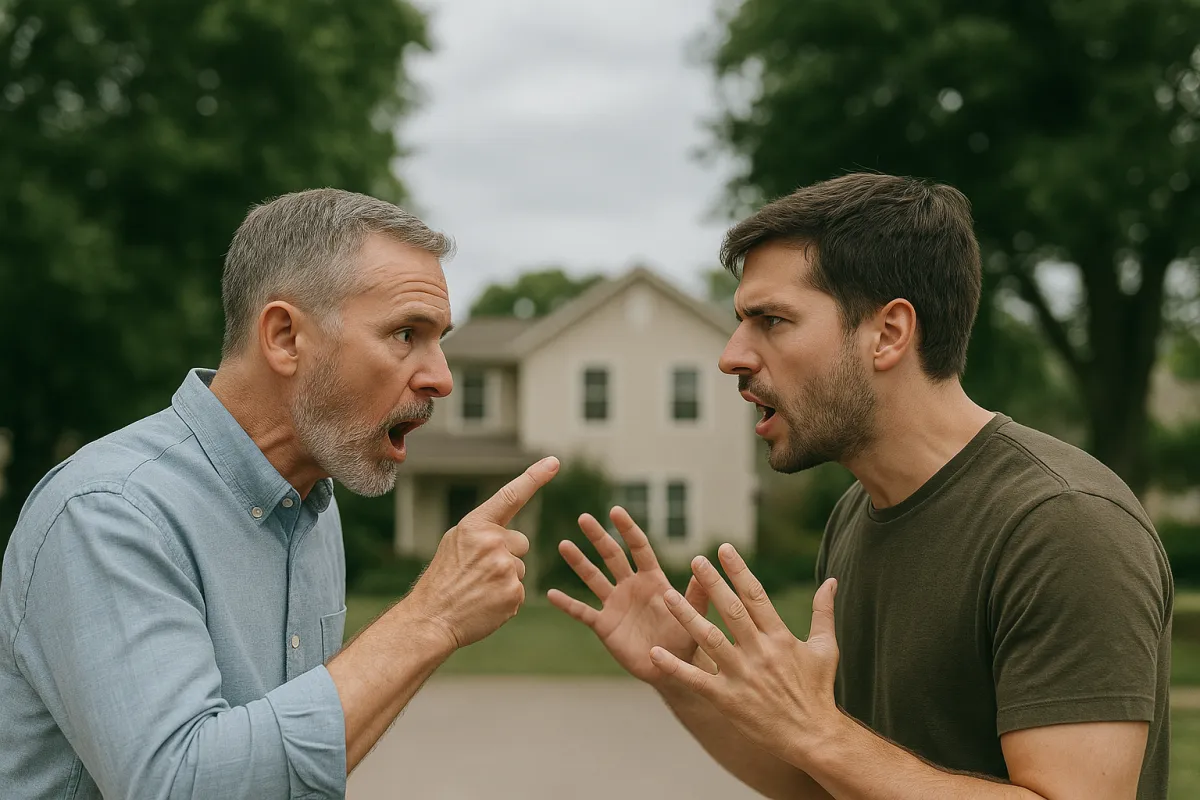
Navigate West Virginia Property Disputes: Resolution Tips
West Virginia Property Dispute Resolution: How to Resolve Property Conflicts Effectively
Property disputes can be some of the most challenging and emotionally charged legal matters that property owners face in West Virginia. Whether you're dealing with boundary disagreements, landlord-tenant conflicts, or contract disputes, finding effective resolution strategies is essential to protecting your property rights and investments. At Ray Winton Kelly Law Firm, we understand the complexities of property disputes in the Mountain State and offer comprehensive legal guidance to help you navigate these challenging situations.
This guide explores the common types of property disputes in West Virginia, effective resolution methods including mediation and litigation, and how experienced legal counsel can help you achieve favorable outcomes while minimizing stress and expense.
What Are the Common Types of Property Disputes in West Virginia?
Property disputes in West Virginia encompass a wide range of conflicts, each with unique legal considerations and resolution approaches. Understanding the nature of your dispute is the first step toward effective resolution.
What Defines Boundary Disputes and How Do They Arise?
Boundary disputes are among the most common property conflicts in West Virginia, particularly in rural areas where property lines may not be clearly marked or documented. These disputes typically arise when:
•Historical property descriptions contain vague or outdated references
•Natural landmarks used as boundary markers have changed over time
•Fences or structures have been built in incorrect locations
•Surveys conducted at different times yield conflicting results
•Neighboring property owners have different interpretations of deed language
West Virginia's mountainous terrain and historical property divisions dating back generations can further complicate boundary determinations. Many properties in the state were originally described using natural landmarks or measurements from features that may no longer exist, creating uncertainty about exact boundary locations.
Boundary disputes often surface when a property owner attempts to make improvements near what they believe is their property line, only to have a neighbor challenge the location. These conflicts can quickly escalate if not addressed professionally and promptly.
How Do Landlord-Tenant Disputes Impact Property Rights in WV?
Landlord-tenant disputes represent another significant category of property conflicts in West Virginia. These disputes typically involve:
•Lease violations and enforcement issues
•Security deposit disagreements
•Maintenance and habitability concerns
•Eviction proceedings and tenant rights
•Rental payment conflicts
•Property damage claims
•Privacy and access disputes
West Virginia law provides specific protections for both landlords and tenants, creating a legal framework that governs these relationships. However, misunderstandings about legal rights and responsibilities often lead to disputes that require professional resolution.
These conflicts can significantly impact property rights by affecting a landlord's ability to manage their investment property effectively or a tenant's right to peaceful enjoyment of their rented home. When unresolved, these disputes can lead to financial losses for both parties and potentially lengthy legal proceedings.
What Are Real Estate Contract Disputes and Their Causes?
Real estate contract disputes occur when parties disagree about the terms, performance, or interpretation of agreements related to property transactions. Common causes include:
•Failure to disclose property defects or material facts
•Disagreements over financing contingencies
•Title issues discovered during the transaction process
•Disputes over earnest money deposits
•Delays in closing or failure to close
•Misrepresentation of property features or condition
•Disagreements about repair responsibilities after inspection
These disputes can arise during any stage of a real estate transaction, from the initial offer through closing and even post-sale. West Virginia's real estate disclosure laws require sellers to inform buyers about known material defects, but interpretations of what constitutes a "material defect" can vary, leading to conflicts.
Contract disputes can be particularly complex because they often involve multiple parties, including buyers, sellers, real estate agents, lenders, and title companies. Resolving these disputes requires careful analysis of contract language and applicable West Virginia property laws.
How Can Mediation Help Resolve Property Disputes in West Virginia?
Mediation offers a collaborative approach to resolving property disputes without the expense and adversarial nature of traditional litigation. This process has become increasingly popular in West Virginia for resolving property conflicts efficiently.
What Is the Mediation Process for Property Disputes in WV?
The mediation process for property disputes in West Virginia typically follows these steps:
1.Selection of a mediator: Parties choose a neutral third party, often an attorney with expertise in property law, to facilitate discussions.
2.Preliminary meetings: The mediator meets with each party separately to understand their positions and concerns.
3.Joint session: All parties come together with the mediator to discuss the dispute and potential solutions.
4.Issue identification: The mediator helps identify the core issues in dispute and areas of potential agreement.
5.Negotiation: Parties work through each issue with the mediator's guidance, exploring compromise solutions.
6.Agreement drafting: If resolution is reached, the mediator helps draft a settlement agreement that can be legally binding.
7.Implementation: Parties follow through on the agreed-upon resolution, which may include boundary adjustments, financial settlements, or modified contracts.
West Virginia courts often encourage or even require mediation before proceeding with litigation in property disputes. Many counties have court-affiliated mediation programs specifically designed to address property conflicts efficiently.
What Are the Benefits of Choosing Mediation Over Litigation?
Mediation offers several significant advantages for resolving property disputes in West Virginia:
•Cost-effectiveness: Mediation typically costs significantly less than pursuing litigation through the court system.
•Time efficiency: While litigation can take months or years to resolve, mediation often concludes in days or weeks.
•Relationship preservation: The collaborative nature of mediation helps maintain relationships between neighbors or business associates who must continue interacting after the dispute.
•Confidentiality: Unlike court proceedings, mediation discussions remain private and confidential.
•Customized solutions: Mediation allows for creative problem-solving and solutions tailored to the specific needs of all parties.
•Greater satisfaction: Research shows that parties who reach agreement through mediation tend to be more satisfied with the outcome and more likely to comply with the terms.
•Reduced stress: The informal, collaborative environment of mediation is typically less stressful than courtroom proceedings.
For property owners in West Virginia's close-knit communities, the relationship-preserving aspect of mediation can be particularly valuable, allowing neighbors to resolve disputes while maintaining community harmony.
How Does Mediation Compare to Litigation in Property Disputes?
When comparing mediation to litigation for property disputes in West Virginia, several key differences emerge:
Aspect
Mediation
Litigation
Control over outcome
Parties maintain decision-making authority
Judge or jury determines outcome
Timeline
Typically weeks to complete
Often months or years
Cost
Generally lower cost
Significantly higher legal fees and court costs
Formality
Informal, flexible process
Formal court procedures and rules
Privacy
Confidential proceedings
Public record of all filings and hearings
Relationship impact
Focuses on preserving relationships
Often damages ongoing relationships
Expertise required
Mediator with subject matter knowledge
Attorney representation required
Enforceability
Binding if agreement is properly executed
Court orders are legally binding
While litigation may be necessary in cases where parties are unwilling to compromise or where legal precedent needs to be established, mediation offers a more efficient and cost-effective approach for most property disputes in West Virginia.
Many property disputes that initially seem destined for lengthy court battles can be successfully resolved through skilled mediation, particularly when both parties recognize the potential cost and uncertainty of litigation.
When Should You Consult Property Dispute Lawyers in West Virginia?
While mediation can be effective for many property disputes, certain situations warrant consulting with an experienced property dispute attorney in West Virginia.
What Roles Do Property Dispute Lawyers Play in Boundary and Contract Conflicts?
Property dispute lawyers in West Virginia fulfill several crucial roles when handling boundary and contract conflicts:
•Legal analysis: Attorneys evaluate deeds, surveys, contracts, and historical documents to determine legal rights and potential claims.
•Evidence gathering: Lawyers help collect and preserve evidence, including property records, correspondence, photographs, and expert opinions.
•Negotiation representation: Attorneys represent clients in negotiations with opposing parties, ensuring their interests are protected.
•Mediation advocacy: Even in mediation, having legal representation ensures your rights are protected and agreements are properly structured.
•Litigation strategy: If court action becomes necessary, attorneys develop and implement effective litigation strategies.
•Expert coordination: Lawyers work with surveyors, title experts, and other professionals to build strong cases.
•Document preparation: Attorneys draft and review settlement agreements, easements, boundary line agreements, and other legal documents.
•Court representation: In litigation, lawyers handle all aspects of court proceedings, from filing complaints to presenting evidence and arguments.
An experienced property dispute attorney brings not only legal knowledge but also negotiation skills and familiarity with local property issues that can be invaluable in resolving complex disputes.
How to Choose the Right Property Dispute Lawyer in West Virginia?
Selecting the right attorney for your property dispute requires careful consideration of several factors:
1.Experience with similar disputes: Look for attorneys who have successfully handled cases similar to yours, whether boundary disputes, landlord-tenant conflicts, or contract issues.
2.Local knowledge: Attorneys familiar with local property records, zoning regulations, and court procedures in your specific West Virginia county will have an advantage.
3.Mediation and litigation skills: The ideal attorney should be skilled in both negotiation/mediation and litigation, allowing flexibility in approach.
4.Client testimonials and reviews: Research past client experiences to gauge the attorney's effectiveness and client satisfaction.
5.Communication style: Choose an attorney who communicates clearly and responds promptly to your questions and concerns.
6.Fee structure transparency: Ensure you understand how fees are calculated and what costs to expect throughout the process.
7.Professional network: Attorneys with established relationships with surveyors, title experts, and other professionals can access resources crucial to resolving property disputes.
8.Conflict resolution philosophy: Some attorneys take an aggressive approach while others focus on collaborative resolution; choose one whose philosophy aligns with your goals.
Initial consultations provide an opportunity to assess these factors and determine if an attorney is the right fit for your specific property dispute.
What Are the Costs and Fees Associated With Property Dispute Legal Services?
Understanding the financial aspects of legal representation for property disputes helps you make informed decisions:
•Consultation fees: Some attorneys offer free initial consultations, while others charge a flat fee for this service.
•Hourly rates: Most property dispute attorneys in West Virginia charge hourly rates ranging from 200to400 per hour, depending on experience and location.
200
t
o
200 to
•Retainer requirements: Attorneys typically require an upfront retainer payment from which they deduct their fees as work progresses.
•Flat fees: For certain well-defined services, such as drafting a boundary line agreement, attorneys may offer flat fee arrangements.
•Contingency arrangements: These are rare in property disputes but might be available in cases involving significant monetary damages.
•Expert witness costs: Surveyors, appraisers, and other experts may charge 1,000to5,000 or more for their services.
1
,
000
t
o
1,000 to
•Filing fees and court costs: These vary by county but typically range from 100to300 for initial filings.
100
t
o
100 to
•Alternative fee arrangements: Some attorneys offer flexible payment plans or reduced rates for mediation-only services.
The total cost of resolving a property dispute varies widely based on complexity, whether litigation is required, and how cooperative the opposing party is in reaching resolution. A transparent discussion about fees should be part of your initial consultation with any attorney.
What Are the Legal Steps to Resolve Boundary Disputes in West Virginia?
Boundary disputes require a systematic approach to resolution, often beginning with informal discussions and potentially progressing to formal legal proceedings.
How Are Property Lines Determined and Surveyed in WV?
In West Virginia, property lines are determined through several methods:
•Deed research: Examining the legal descriptions in property deeds, which may reference metes and bounds, government surveys, or lot and block numbers.
•Professional surveys: Licensed surveyors use specialized equipment and techniques to establish boundary lines based on deed descriptions and physical monuments.
•Historical evidence: Previous surveys, maps, and historical documents can provide context for boundary determinations.
•Physical monuments: Natural features (trees, streams) or artificial markers (iron pins, stone monuments) referenced in deeds help establish boundaries.
•Adjacent property research: Examining neighboring property descriptions to ensure consistency and identify potential overlaps or gaps.
The survey process typically involves:
1.Research phase: Gathering all relevant deeds, prior surveys, and historical records.
2.Field work: Locating existing monuments and measuring distances and angles according to deed descriptions.
3.Analysis: Reconciling any discrepancies between deed descriptions and physical evidence.
4.Monument setting: Placing new boundary markers if original monuments are missing.
5.Documentation: Creating a detailed survey plat showing property lines and monuments.
West Virginia law requires surveyors to be licensed by the state and follow established professional standards. When disputes arise, courts generally give significant weight to properly conducted surveys, though they may also consider other evidence such as long-standing use patterns.
What Is Adverse Possession and How Does It Affect Boundary Disputes?
Adverse possession is a legal doctrine that can significantly impact boundary disputes in West Virginia. It allows someone who has openly occupied another's land for a specific period to gain legal ownership under certain conditions.
In West Virginia, the requirements for adverse possession include:
•Actual possession: The person must physically occupy or use the disputed property.
•Open and notorious use: The use must be visible and obvious to the true owner.
•Exclusive use: The possessor must use the property exclusively, not sharing it with the true owner or public.
•Hostile/adverse use: The possession must be without the true owner's permission.
•Continuous use: The possession must be uninterrupted for the statutory period.
•Statutory period: In West Virginia, the adverse possession must continue for at least 10 years.
Adverse possession claims frequently arise in boundary disputes when one neighbor has been using land beyond their actual property line for an extended period, such as maintaining a garden, parking vehicles, or having a fence in place.
Courts carefully evaluate adverse possession claims, requiring clear and convincing evidence that all elements have been satisfied. If successful, an adverse possession claim can effectively redraw property lines based on long-standing use rather than deed descriptions.
How Can Litigation Resolve Boundary Disputes in West Virginia?
When other resolution methods fail, litigation provides a definitive process for resolving boundary disputes:
1.Filing a complaint: The process begins with filing a legal complaint, typically seeking a "quiet title" action or declaratory judgment to establish boundary lines.
2.Service of process: The opposing party must be formally notified of the lawsuit through proper legal channels.
3.Discovery phase: Both parties exchange relevant documents, depose witnesses, and gather evidence to support their positions.
4.Expert testimony: Surveyors and other experts may provide professional opinions about the correct boundary location.
5.Trial proceedings: Each side presents evidence and arguments to the judge or jury.
6.Court determination: The court issues a ruling establishing the legal boundary line.
7.Judgment recording: The court's decision is recorded with the county clerk, becoming part of the official property record.
8.Boundary marking: Following the judgment, surveyors may place new markers reflecting the court-determined boundary.
West Virginia courts approach boundary disputes by examining deed language, survey evidence, historical use patterns, and potentially adverse possession claims. Judges have the authority to order property lines redrawn based on their findings.
While litigation provides a definitive resolution, it is typically the most expensive and time-consuming approach to boundary disputes. Courts often encourage parties to attempt mediation before proceeding to trial.
How Are Landlord-Tenant Disputes Resolved Under West Virginia Law?
Landlord-tenant relationships in West Virginia are governed by specific laws that provide a framework for resolving disputes when they arise.
What Are Tenant Rights and Landlord Obligations in WV?
West Virginia law establishes clear rights and responsibilities for both parties in a rental agreement:
Tenant Rights in West Virginia:
•Right to a habitable dwelling that meets basic health and safety standards
•Right to privacy and quiet enjoyment of the property
•Right to proper notice before landlord entry (typically 24 hours except in emergencies)
•Right to the return of security deposits within 30 days after lease termination
•Right to proper notice before eviction proceedings
•Right to be free from discrimination based on protected characteristics
•Right to request necessary repairs and maintenance
Landlord Obligations in West Virginia:
•Maintain the property in habitable condition
•Make necessary repairs in a timely manner
•Comply with building and housing codes
•Provide essential services (water, heat, electricity)
•Respect tenant privacy and provide proper notice before entry
•Return security deposits with itemized deductions if applicable
•Follow legal procedures for lease termination and eviction
•Maintain common areas in multi-unit properties
Understanding these rights and obligations is essential for both preventing and resolving disputes. Many conflicts arise from misunderstandings about these legal requirements or failure to document agreements properly.
How Does the Eviction Process Work in West Virginia?
The eviction process in West Virginia follows specific legal requirements:
1.Valid cause: Landlords must have legal grounds for eviction, such as non-payment of rent, lease violations, property damage, or lease expiration.
2.Written notice: Before filing for eviction, landlords must provide proper written notice:
•For non-payment of rent: Typically a 5-day notice to pay or quit
•For lease violations: Usually a 30-day notice to cure the violation or vacate
•For month-to-month tenancies: 30-day notice to terminate
3.Filing the eviction lawsuit: If the tenant doesn't comply with the notice, the landlord files an unlawful detainer action in magistrate court.
4.Court hearing: Both parties present their case before a magistrate judge.
5.Judgment: If the court rules in the landlord's favor, a judgment for possession is issued.
6.Writ of possession: If the tenant still doesn't vacate, the landlord can obtain a writ of possession.
7.Enforcement: Only law enforcement officers can physically remove tenants and their belongings.
Self-help evictions—such as changing locks, removing doors, or shutting off utilities—are illegal in West Virginia and can result in landlords being liable for damages. The formal eviction process, while sometimes lengthy, is the only legal method for removing tenants.
What Are Common Lease Violations and How Are They Addressed?
Lease violations frequently lead to landlord-tenant disputes in West Virginia. Common violations include:
•Unauthorized occupants: People living in the property who aren't on the lease
•Unpermitted pets: Animals in violation of no-pet policies or pet restrictions
•Property damage: Damage beyond normal wear and tear
•Illegal activities: Criminal conduct on the premises
•Noise disturbances: Excessive noise that disturbs other tenants or neighbors
•Unauthorized alterations: Making changes to the property without permission
•Subletting violations: Renting to others without landlord approval
These violations are typically addressed through a progressive approach:
1.Verbal warning: An informal discussion about the issue
2.Written notice: A formal notice documenting the violation and requesting correction
3.Notice to cure or quit: A legal notice giving the tenant time to fix the problem or move out
4.Eviction filing: Legal action if the violation isn't remedied
Many lease violations can be resolved through clear communication and documentation. Landlords should maintain detailed records of all notices and communications regarding violations, while tenants should document their compliance efforts and any relevant circumstances.
Mediation services specifically designed for landlord-tenant disputes are available in many West Virginia counties and can help resolve these issues without court involvement.
What Should You Know About Real Estate Contract Dispute Resolution in West Virginia?
Real estate transactions involve complex contracts that can lead to disputes requiring specialized resolution approaches.
How Are Breach of Contract Issues Handled in WV Property Disputes?
Breach of contract claims in West Virginia real estate transactions follow these general steps:
1.Identifying the breach: Determining exactly how one party failed to fulfill contractual obligations.
2.Notice of breach: The non-breaching party typically sends formal notice identifying the breach and requesting remedy.
3.Opportunity to cure: Many contracts provide a period during which the breaching party can correct the issue.
4.Negotiation: Parties often attempt to resolve the dispute through direct negotiation.
5.Mediation: If negotiation fails, mediation may be required by the contract or chosen voluntarily.
6.Litigation: If other methods fail, the non-breaching party may file a lawsuit seeking remedies such as:
•Monetary damages
•Specific performance
•Rescission (cancellation) of the contract
•Reformation of contract terms
West Virginia courts evaluate breach of contract claims by examining the contract language, the parties' actions, and whether the breach was material (significant enough to justify legal remedy).
Common remedies in real estate contract disputes include:
•Compensatory damages: Money to compensate for losses caused by the breach
•Specific performance: Court order requiring completion of the contract as written
•Liquidated damages: Predetermined damage amounts specified in the contract
•Rescission: Cancellation of the contract, returning parties to their pre-contract positions
The appropriate remedy depends on the nature of the breach and the specific circumstances of the transaction.
What Are Disclosure Requirements and Their Impact on Disputes?
West Virginia law requires sellers to disclose known material defects that could affect a property's value. These disclosure requirements significantly impact real estate disputes:
•Seller's disclosure form: While not statutorily mandated in West Virginia, most real estate transactions use a standard disclosure form covering structural elements, systems, and known defects.
•Material defects: Sellers must disclose known problems that could significantly affect the property's value or a buyer's decision to purchase.
•Latent defects: Hidden problems not discoverable through reasonable inspection must be disclosed if known to the seller.
•Misrepresentation claims: Failure to disclose known defects can lead to claims of misrepresentation or fraud.
•"As is" clauses: These provisions limit but do not eliminate a seller's disclosure obligations for known defects.
Disclosure-related disputes typically arise when buyers discover problems after closing that they believe the seller knew about but failed to disclose. These disputes often involve:
•Water damage or mold issues
•Foundation or structural problems
•Roof defects
•Environmental contamination
•Boundary or easement issues
•Building code violations
•Previous insurance claims
Courts evaluate these claims based on what the seller actually knew (not what they should have known) and whether the information was material to the transaction. Buyers must typically prove that the seller had actual knowledge of the undisclosed defect.
When Is Specific Performance Used in Real Estate Conflicts?
Specific performance is a legal remedy that requires a party to fulfill their contractual obligations exactly as written. In West Virginia real estate disputes, specific performance is:
•Available when monetary damages are inadequate: Courts recognize that each piece of real estate is unique, making monetary damages potentially insufficient.
•Commonly sought by buyers: When sellers refuse to complete a sale after a binding contract is formed.
•Sometimes requested by sellers: Though less common, sellers may seek specific performance to force buyers to complete purchases.
•Subject to equitable principles: Courts consider factors such as fairness, hardship, and whether the contract terms are clear and complete.
•Discretionary: Judges have significant latitude in deciding whether to grant specific performance.
To obtain specific performance in West Virginia, the requesting party must demonstrate:
1.A valid, enforceable contract exists
2.The terms are clear and definite enough to be enforced
3.The party seeking enforcement has performed or is ready to perform their obligations
4.Monetary damages would be inadequate compensation
5.Enforcement would not be unfair or create undue hardship
Specific performance is particularly important in real estate transactions because properties are unique, and monetary damages often cannot adequately compensate for the loss of a specific property opportunity.
Why Choose Local West Virginia Expertise for Property Dispute Resolution?
When facing property disputes in West Virginia, working with attorneys who understand the local legal landscape provides significant advantages.
How Does Local Knowledge Improve Dispute Outcomes?
Local expertise offers several distinct advantages in West Virginia property disputes:
•Familiarity with regional property issues: Local attorneys understand common boundary issues in West Virginia's varied terrain and historical property divisions.
•Knowledge of county record systems: Each West Virginia county maintains property records differently; local attorneys navigate these systems efficiently.
•Relationships with surveyors and experts: Established connections with qualified local professionals who can provide crucial evidence and testimony.
•Understanding of local judges and courts: Insight into how specific judges approach property disputes and interpret state law.
•Awareness of local ordinances: Many property disputes involve county or municipal regulations that vary throughout the state.
•Historical context: Knowledge of local property development patterns, historical land use, and previous disputes in the area.
•Community standards: Understanding of local customs and practices that may influence property use and boundary determinations.
West Virginia's diverse regions—from urban areas to rural communities—each present unique property challenges. Attorneys with specific experience in your county or region bring contextual knowledge that can be invaluable in resolving disputes effectively.
What Makes Mountain State Legal a Trusted Property Dispute Firm?
Ray Winton Kelly Law Firm has established itself as a trusted resource for property dispute resolution in West Virginia through:
•Specialized expertise: Our attorneys focus specifically on property law and dispute resolution, handling hundreds of cases throughout West Virginia.
•Deep local roots: With generations of experience in the Mountain State, we understand the unique property challenges facing West Virginia landowners.
•Comprehensive approach: We offer both mediation services and litigation representation, providing flexible options for dispute resolution.
•Track record of success: Our firm has successfully resolved complex boundary disputes, contract conflicts, and landlord-tenant issues throughout the state.
•Client-centered philosophy: We prioritize practical, cost-effective solutions that address our clients' specific needs and concerns.
•Technological advantage: We utilize advanced mapping technology, digital record systems, and modern case management tools while maintaining personal service.
•Educational approach: We help clients understand their legal options and the potential outcomes of different resolution strategies.
Our attorneys' combination of legal expertise and local knowledge allows us to develop effective strategies tailored to West Virginia's unique property landscape.
How Can Personalized Service Reduce Costs and Stress?
The personalized approach to property dispute resolution offers tangible benefits:
•Targeted strategies: Rather than one-size-fits-all solutions, personalized service allows attorneys to develop approaches specifically tailored to your dispute's unique circumstances.
•Efficient resource allocation: Understanding your priorities helps focus resources on what matters most to you, avoiding unnecessary expenses.
•Emotional support: Property disputes often carry significant emotional weight; personalized service includes supporting clients through the stress and uncertainty.
•Clear communication: Regular updates and explanations in plain language help reduce anxiety about the process and outcome.
•Realistic expectations: Honest assessment of strengths, weaknesses, and likely outcomes helps clients make informed decisions.
•Flexible scheduling: Accommodating client needs for meetings and communications minimizes disruption to work and family life.
•Appropriate resolution methods: Personalized service means recommending the most suitable approach—whether negotiation, mediation, or litigation—based on the specific dispute and client goals.
By understanding not just the legal aspects but also the personal impact of property disputes, attorneys can provide more effective representation while minimizing both financial costs and emotional strain.
Conclusion
Property disputes in West Virginia require thoughtful, informed approaches to resolution. Whether you're facing boundary disagreements, landlord-tenant conflicts, or contract disputes, understanding your legal options is the first step toward effective resolution.
At Ray Winton Kelly Law Firm, we combine deep knowledge of West Virginia property law with personalized service to help clients navigate these challenging situations. From mediation to litigation, our goal is to protect your property rights while finding practical, cost-effective solutions.
If you're facing a property dispute in West Virginia, contact our experienced team for a consultation to discuss your specific situation and develop a strategic plan for resolution.
