
Power of Attorney in West Virginia
Power of Attorney in West Virginia: Comprehensive Legal Guidance and Document Types
By Ray Winton & Kelley
Recognising the legal significance of a Power of Attorney (POA) in West Virginia is essential to estate and incapacity planning. A POA is a legal instrument by which a principal appoints an agent to act on the principal’s behalf when the principal cannot act personally. This article summarises the main POA types in West Virginia, the statutory formalities for execution, and the rights and limits that apply so individuals can choose the appropriate form for their circumstances.
The guide covers durable, medical, financial, and limited POAs, explains execution and revocation procedures, and outlines the statutory duties and restrictions that protect principals and guide agents.
What Are the Different Types of Power of Attorney in West Virginia?
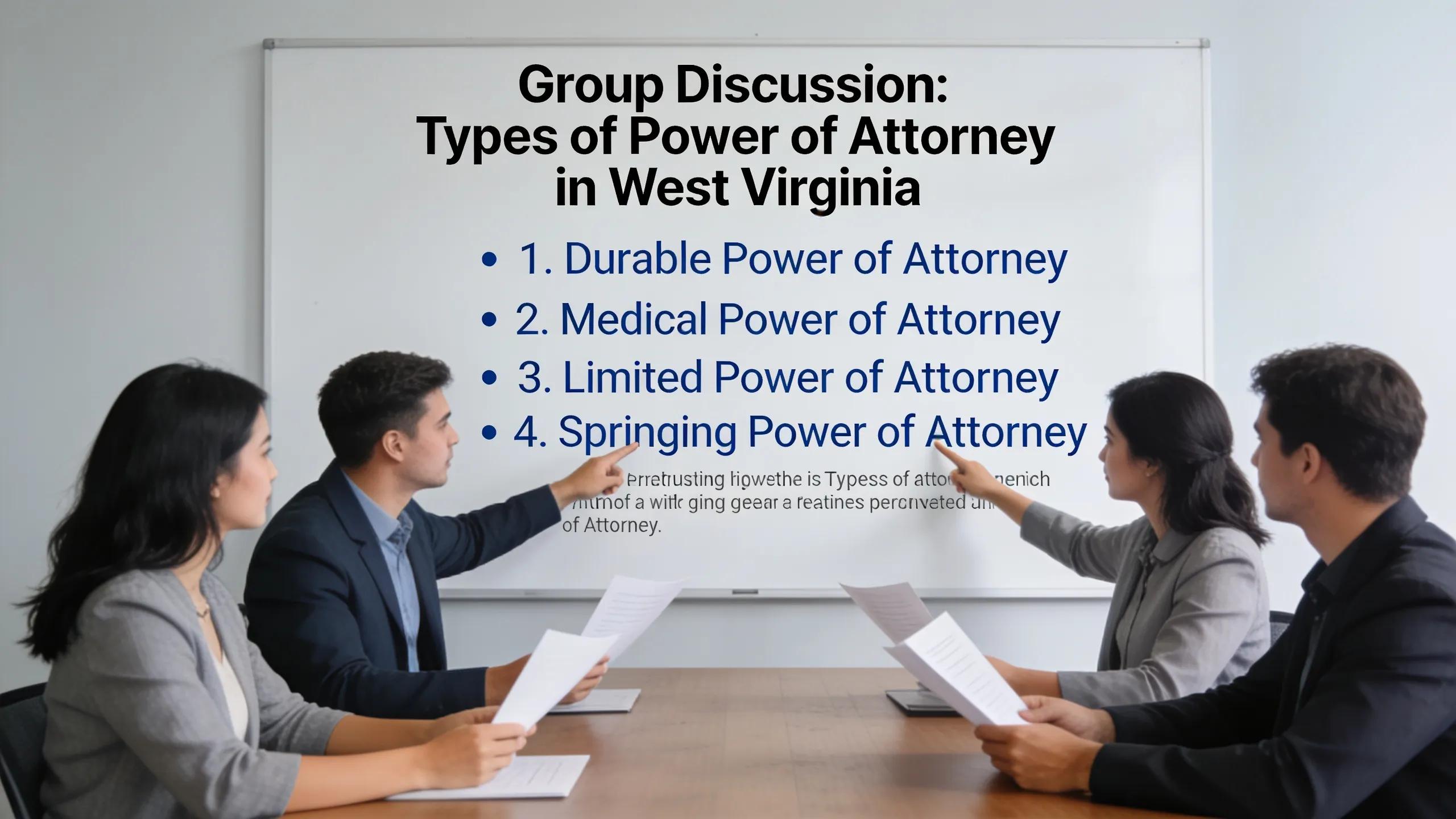
West Virginia law recognises several POA instruments tailored to particular decision‑making needs so a principal can appoint an agent to manage defined aspects of their affairs. Understanding the differences helps in selecting appropriate representation. Ray Winton and Kelley, PLLC offers assistance in preparing these power of attorney documents.
Document Type
Description
Use Cases
Durable Power of Attorney
Remains effective even when the principal is incapacitated.
To ensure continuous management during health crises.
Medical Power of Attorney
Grants authority to make healthcare decisions.
To make medical choices when the principal cannot.
Financial Power of Attorney
Allows the agent to manage financial matters.
For handling bank transactions, bill payments, or tax filings.
Limited Power of Attorney
Specific powers assigned to an agent for a defined period or purpose.
Ideal for handling single transactions or temporary arrangements.
How Does a Durable Power of Attorney Protect You During Incapacity?
A Durable POA lets an appointed agent continue managing the principal's affairs after incapacity, often avoiding formal guardianship. As part of a broader estate plan, a power of attorney works alongside wills, trusts, and other planning documents to protect your affairs and wishes.
Example: Consider a Kanawha County resident who suffers a sudden stroke. Without a Durable POA in place, the family must petition the circuit court for a formal guardianship or conservatorship — a costly and time-consuming process. With a valid Durable POA already executed, the named agent can immediately step in to pay the resident's mortgage, manage bank accounts, and communicate with healthcare providers, without any court intervention.
What Are the Roles of Medical, Financial, and Limited Powers of Attorney?
A Medical Power of Attorney authorises an agent to make healthcare decisions when the principal cannot communicate. This is critical in emergencies requiring immediate treatment choices.
Example: A principal in Charleston is involved in a serious motor vehicle accident and is rendered unconscious. The attending physician at Charleston Area Medical Center must determine whether to proceed with emergency surgery. With a Medical POA on file, the designated agent can provide timely consent, ensuring treatment is not delayed due to the absence of the principal's own voice.
A Financial Power of Attorney empowers an agent to handle financial responsibilities—paying bills, managing investments, and conducting transactions—helping preserve stability during incapacity. For matters involving real estate, see the firm's financial management assistance.
Example: An elderly Putnam County resident with advancing dementia can no longer manage their affairs. A Financial POA allows their adult child to continue paying utility bills, managing the resident's retirement accounts, and filing annual tax returns on their behalf — without interruption to household finances.
A Limited Power of Attorney restricts authority to specified acts or a set time frame (for example, a single closing), providing focused authority while protecting broader interests.
Example: A West Virginia property owner relocating out of state for work must complete a real estate closing in Cabell County but cannot be present in person. A Limited POA grants the designated representative authority solely to execute the deed and related closing documents on a specified date, with no broader financial or personal authority conferred.
What Are the Legal Requirements and Procedures to Establish Power of Attorney in West Virginia?
Valid POAs must comply with statutory formalities so the instrument is effective and enforceable.
Which Formalities Must Be Followed for Power of Attorney Forms in WV?
The principal must be at least 18 and of sound mind, and the POA must be notarised. Two witnesses are required for Durable and Medical POAs but not for Financial or Limited POAs. Clear, precise language identifying the powers granted reduces ambiguity and disputes.
How Is the Effective Date Determined for Different Power of Attorney Types?
The effective date depends on the document: some Durable POAs take effect immediately, while Springing POAs become effective only when specified conditions—commonly the principal’s incapacity—occur. The POA should state the effective date and any triggering conditions clearly.
How Can You Revoke or Modify a Power of Attorney in West Virginia?

Revocation or modification is appropriate when circumstances change or an agent is unsuitable.
What Legal Steps Are Required to Revoke a Power of Attorney Document?
To revoke a POA, the principal should notify the agent in writing and may file a revocation with the local clerk of court. While filing is not always mandatory, written notice and any available filing help ensure third parties are informed and prevent the former agent from continuing to act.
When Is Modification of Power of Attorney Appropriate and How Is It Done?
To change a POA, a principal typically executes a new document specifying revised powers and expressly superseding earlier instruments. Consulting legal counsel helps ensure correct language and procedure; the firm’s background and expertise can assist.
What Rights and Limitations Does a Power of Attorney Grant Under West Virginia Law?
Understanding the scope of an agent’s authority helps principals balance delegation with control.
Which Authority Does an Attorney-in-Fact Hold Over Principal’s Affairs?
An attorney‑in‑fact may exercise powers conferred by the POA within the document’s boundaries, including financial transactions, healthcare decisions, and management of real property. The agent must act in the principal’s best interests and follow the instrument’s terms.
What Restrictions Exist to Protect Principals from Potential Abuse?
West Virginia law limits misuse: restrictions can bar self‑dealing, limit gifts to the agent, and require transparent record‑keeping. Principals should choose trustworthy agents or professionals and seek counsel when drafting documents; for help, contacting legal counsel is advisable.
Frequently Asked Questions
Can a Power of Attorney be used for someone who lives out of state?
Yes. A POA can involve principals or agents in other states, but it should meet the statutory requirements of West Virginia and the other jurisdiction. When states differ, consult counsel familiar with both jurisdictions to ensure enforceability.
What happens if the agent named in a Power of Attorney cannot serve?
If the named agent cannot or will not serve, a principal should appoint an alternate if provided for in the original document or execute a new POA naming a replacement. Any successor should understand and accept the duties to avoid complications.
Are there situations where a Power of Attorney could be challenged?
Yes. Challenges may arise for lack of mental capacity, coercion or fraud, or claims the agent is not acting in the principal’s best interests. Clear documentation and compliance with execution rules reduce the risk; legal counsel can strengthen a document’s validity.
What is the difference between a durable and a springing Power of Attorney?
A Durable POA takes effect on execution and remains operative if the principal becomes incapacitated. A Springing POA becomes operative only when specified conditions (typically incapacity) occur. Choice depends on the principal’s preferences for timing and control.
Can a principal limit the powers granted to an agent in a Power of Attorney?
Yes. A principal may restrict the agent’s authority by specifying tasks or limiting certain transactions. Precise drafting prevents misunderstandings and ensures the agent’s powers align with the principal’s intentions.
Is it necessary to have a lawyer draft a Power of Attorney?
While not strictly required, retaining counsel is strongly recommended. A lawyer ensures state-law compliance, includes necessary provisions, and accurately reflects the principal’s intentions, reducing the risk of future disputes.
Common Scenarios & Pitfalls for West Virginia Power of Attorney
Even carefully considered POA arrangements can encounter practical problems. The following scenarios illustrate issues that arise frequently in West Virginia and the steps that reduce risk.
Scenario 1: The Unsigned or Improperly Witnessed Document
A Morgantown family discovers after a parent's incapacitation that the Durable POA was signed but never notarised — failing a statutory requirement under West Virginia law. The document is unenforceable, and the family must pursue a formal conservatorship through the circuit court. Pitfall: Treating notarisation as optional. Lesson: Always confirm that the executed document meets every formality before filing it away.
Scenario 2: An Agent Who Exceeds the Granted Authority
An agent holding a Financial POA for a Raleigh County principal begins making large gifts to themselves from the principal's investment accounts, claiming a broad "gift-giving" clause permits it. West Virginia law restricts self-dealing and requires agents to act in the principal's best interests. The principal's family challenges the transactions, and the agent faces potential civil liability. Pitfall: Vague or overly broad grant language. Lesson: Expressly limit gift authority and self-dealing in the document, and choose an agent with no conflict of interest.
Scenario 3: The Springing POA That Stalls at the Bank
A Huntington resident executes a Springing POA that activates on "incapacity as certified by two physicians." When the agent presents the document to a local bank, the institution demands copies of both certifications before processing any transactions — creating a several-week delay during a financial emergency. Pitfall: Failing to anticipate third-party acceptance requirements. Lesson: Consider a Durable POA that takes effect immediately, or clearly define the certification procedure and keep physician letters accessible alongside the document.
Scenario 4: Failing to Notify Third Parties of Revocation
A principal in Charleston executes a new POA naming a different agent but neglects to formally notify the former agent or file the revocation with the Kanawha County Clerk. The prior agent continues to conduct transactions, creating confusion and potential liability. Pitfall: Assuming a new document automatically cancels prior authority in the eyes of third parties. Lesson: Deliver written notice of revocation to the former agent, all relevant financial institutions, and healthcare providers — and consider filing with the county clerk of court for a clear public record.
Scenario 5: Using an Out-of-State Form
A principal who recently moved to Beckley uses a generic online POA form drafted for another state. The document lacks the specific language and witness requirements mandated by the West Virginia Uniform Power of Attorney Act, and a local financial institution refuses to honour it. Pitfall: Relying on non-WV templates. Lesson: Have any POA reviewed or drafted by West Virginia–licensed counsel to ensure compliance with state-specific statutory requirements.
